
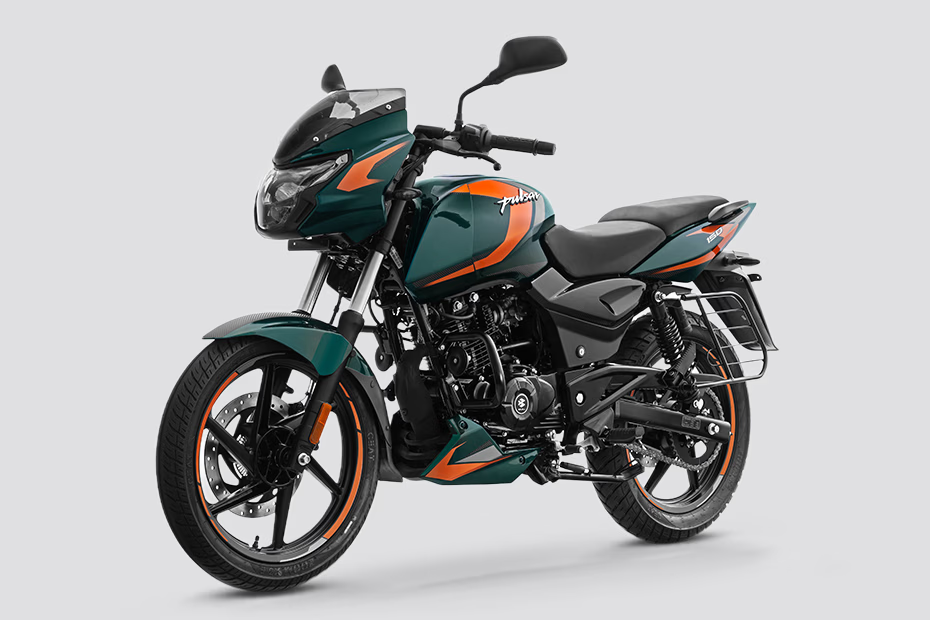
When you think about buying a motorcycle in 2026, your mind probably goes straight to the sleek design, the shiny paint, and the sound of the engine. While those things are exciting, the two most important factors for your long-term happiness on the road are safety features & riding comfort. Riding a bike is a physical activity. Unlike sitting in a car, you are exposed to the elements, and your body is part of the machine’s balance. If you are not comfortable, you get tired. If you are tired, you make mistakes. This is why manufacturers have spent millions of dollars researching how to integrate better safety features & riding comfort into every model, from small city commuters to massive touring bikes. In this guide, we will explore why these elements are the true backbone of a great motorcycle and how you can choose a bike that protects you while keeping you relaxed on the road.
The Connection Between Safety Features & Riding Comfort
Many people think that safety features & riding comfort are two separate things, but they are actually deeply connected. This is a concept called “active safety.” When a bike has great safety features & riding comfort, the rider stays fresh and alert for longer periods. If a seat is too hard or the handlebars vibrate too much, your muscles get stiff and your brain becomes foggy. A tired rider has slower reaction times, which is a major safety risk. Therefore, when we talk about safety features & riding comfort, we are talking about a total system designed to keep you in the best possible mental and physical state to handle the road. A comfortable bike is inherently a safer bike because it allows the human “computer” on top to function at 100% capacity.
Understanding ABS: The King of Safety Features & Riding Comfort
In the world of safety features & riding comfort, the Anti-lock Braking System (ABS) is perhaps the most important invention of the last thirty years. Before ABS, if a rider grabbed the brakes too hard on a wet or sandy road, the wheels would lock up, causing the bike to slide and fall. Modern safety features & riding comfort technology now includes ABS as a standard on almost all bikes above 125cc. It uses sensors to monitor wheel speed and “pulses” the brakes many times per second to prevent a lock-up. This allows you to stop in the shortest distance possible without losing control. Knowing that your bike has these advanced safety features & riding comfort gives you immense peace of mind, which in turn makes your ride much more comfortable and stress-free.
The Role of Traction Control in Safety Features & Riding Comfort
Another massive jump in safety features & riding comfort is Traction Control. While ABS helps you stop, Traction Control helps you go. It prevents the rear wheel from spinning out of control when you accelerate on slippery surfaces like wet leaves, manhole covers, or gravel. For a beginner, this is one of the most vital safety features & riding comfort because it prevents “high-side” crashes where the bike suddenly regains grip and throws the rider off. By managing the engine’s power delivery to the road, Traction Control ensures that the bike remains stable. This stability is a key part of safety features & riding comfort, as it prevents the rider from feeling “on edge” every time they see a patch of rain on the ground.
Ergonomics: The Foundation of Safety Features & Riding Comfort
When we talk about “ergonomics,” we are talking about the physical relationship between your body and the bike. This is the heart of safety features & riding comfort. The “Rider Triangle” consists of the handlebars, the seat, and the footpegs. If these three points are not placed correctly for your height, you will suffer. Poorly designed safety features & riding comfort can lead to wrist pain, backaches, and numbing in your legs. A bike with good safety features & riding comfort will allow your spine to remain neutral and your arms to stay relaxed. When your body is in a natural position, you have better control over the steering and the brakes. Always sit on a bike for at least ten minutes in the showroom to test the safety features & riding comfort of that specific model before you buy it.
Suspension: Smoothing the Path for Safety Features & Riding Comfort
The suspension system is often overlooked when people discuss safety features & riding comfort, but it is critical. The job of the suspension is to keep the tires in contact with the ground while absorbing the shock of potholes and bumps. A bike with high-quality safety features & riding comfort suspension will glide over rough roads without disturbing the rider’s balance. If the suspension is too stiff, the bike will bounce, which reduces your grip and makes the ride painful. If it is too soft, the bike will feel “mushy” and unstable in corners. Modern safety features & riding comfort now often include adjustable suspension, allowing you to tune the bike based on your weight and whether you are carrying a passenger or luggage.
Wind Protection and Its Impact on Safety Features & Riding Comfort
Riding at highway speeds creates a massive amount of “wind blast” against your chest and head. This wind pressure is a major enemy of safety features & riding comfort. It forces your muscles to work constantly just to stay upright, leading to “wind fatigue.” Bikes designed with excellent safety features & riding comfort usually feature windscreens and fairings that move the air around the rider. This creates a “bubble” of calm air, which significantly reduces noise and physical strain. In 2026, many mid-range bikes come with adjustable windscreens, which is a fantastic addition to the safety features & riding comfort package. Being able to block the wind on a cold morning or get some airflow on a hot afternoon makes a world of difference to your riding experience.
Slipper Clutches: Enhancing Safety Features & Riding Comfort in Traffic
If you do a lot of city riding, you are constantly using the clutch to shift gears. This can lead to hand fatigue, but modern safety features & riding comfort have a solution called the “Slipper Clutch.” This technology serves two purposes. First, it makes the clutch lever much lighter to pull, which is a huge boost to safety features & riding comfort during rush hour traffic. Second, it prevents the rear wheel from “hopping” or locking up if you downshift too aggressively. This second function is a major part of the safety features & riding comfort system, as it keeps the bike stable during sudden deceleration. It is a small mechanical detail that adds a massive layer of protection and ease to your daily commute.
Seat Quality: The Most Direct Part of Safety Features & Riding Comfort
It sounds simple, but the seat is where you spend 100% of your time while riding. You cannot have a high level of safety features & riding comfort if the seat is like a wooden plank. Manufacturers now use “3D Gel” or high-density foam to improve safety features & riding comfort for long-distance trips. A good seat should be wide enough to support your “sit bones” but narrow enough at the front so you can easily put your feet down at stoplights. The height of the seat is also part of the safety features & riding comfort equation. If the seat is too high, you might feel unstable when stopped; if it is too low, your knees might be too cramped. Finding the right seat is the quickest way to improve the safety_features & riding_comfort of any motorcycle.
Lighting and Visibility as Core Safety Features & Riding Comfort
Safety is also about being seen. In 2026, LED lighting has become a standard part of the safety features & riding comfort conversation. LED headlights are much brighter and whiter than old halogen bulbs, allowing you to see hazards in the road much earlier at night. Furthermore, LED DRLs (Daytime Running Lights) make you much more visible to car drivers during the day. This “conspicuity” is one of the most effective safety features & riding comfort you can have. Some modern bikes even have “Cornering Lights” that lean with the bike to light up the inside of a turn. This advanced technology bridges the gap between safety features & riding comfort, making night riding feel almost as natural and safe as riding in the sun.
Vibration Management in Safety Features & Riding Comfort
Engine vibration is a subtle killer of safety features & riding comfort. If an engine is not balanced well, it sends high-frequency vibrations through the handlebars and footpegs. Over an hour-long ride, this vibration can cause “white finger” or a loss of feeling in your hands. This is not just uncomfortable; it is a major safety issue because you lose the “feel” for the throttle and brakes. To improve safety features & riding comfort, engineers use “counter-balancers” inside the engine and rubber-mounted handlebars. When you are looking for a bike, check reviews specifically for “NVH” (Noise, Vibration, and Harshness). A smooth engine is a core component of the safety features & riding comfort that keeps you riding longer and happier.
Choosing the Right Gear to Match Your Bike’s Safety Features & Riding Comfort
No matter how many safety features & riding comfort your bike has, you are still responsible for your own protection. Your helmet, jacket, and boots are the final layer of your safety features & riding comfort system. A helmet that is too noisy or a jacket that doesn’t breathe will ruin the safety features & riding comfort provided by the machine. In 2026, we have “Airbag Jackets” that can inflate in milliseconds if you fall. This is the ultimate peak of personal safety features & riding comfort. Always remember that your gear should work in harmony with your bike. For example, if your bike has no windscreen, you need a helmet with excellent aerodynamics to maintain your safety features & riding comfort.
The Future of Safety Features & Riding Comfort: AI and Beyond
As we look toward the future of 2026 and beyond, safety features & riding comfort are becoming even more high-tech. We are seeing “Adaptive Cruise Control,” which uses radar to keep a safe distance from the car in front of you. This is a massive leap for safety features & riding comfort on long highway journeys. We are also seeing “Blind Spot Detection” systems that vibrate the mirrors if a car is hiding where you can’t see it. These digital safety features & riding comfort acts as an extra set of eyes for the rider. While some purists think this is too much tech, for the daily commuter, these safety features & riding comfort can be the difference between a close call and an accident.
Conclusion: Prioritizing Safety Features & Riding Comfort
In conclusion, when you are looking for your next motorcycle, don’t just look at the top speed or the price. Focus on the safety features & riding comfort. Ask yourself: Will this bike protect me in a panic situation? Will it keep me comfortable enough to stay alert after two hours of riding? A bike that wins in the category of safety features & riding comfort is a bike you will keep for a long time. It is a bike that will take you on thousands of adventures and bring you home safely every single time.
Investing in safety features & riding comfort is never a waste of money. It is an investment in your health, your happiness, and your passion for riding. The road is a beautiful place, but it can also be unpredictable. By choosing a machine that prioritizes safety features & riding comfort, you are giving yourself the best possible chance to enjoy the ride for many years to come.