
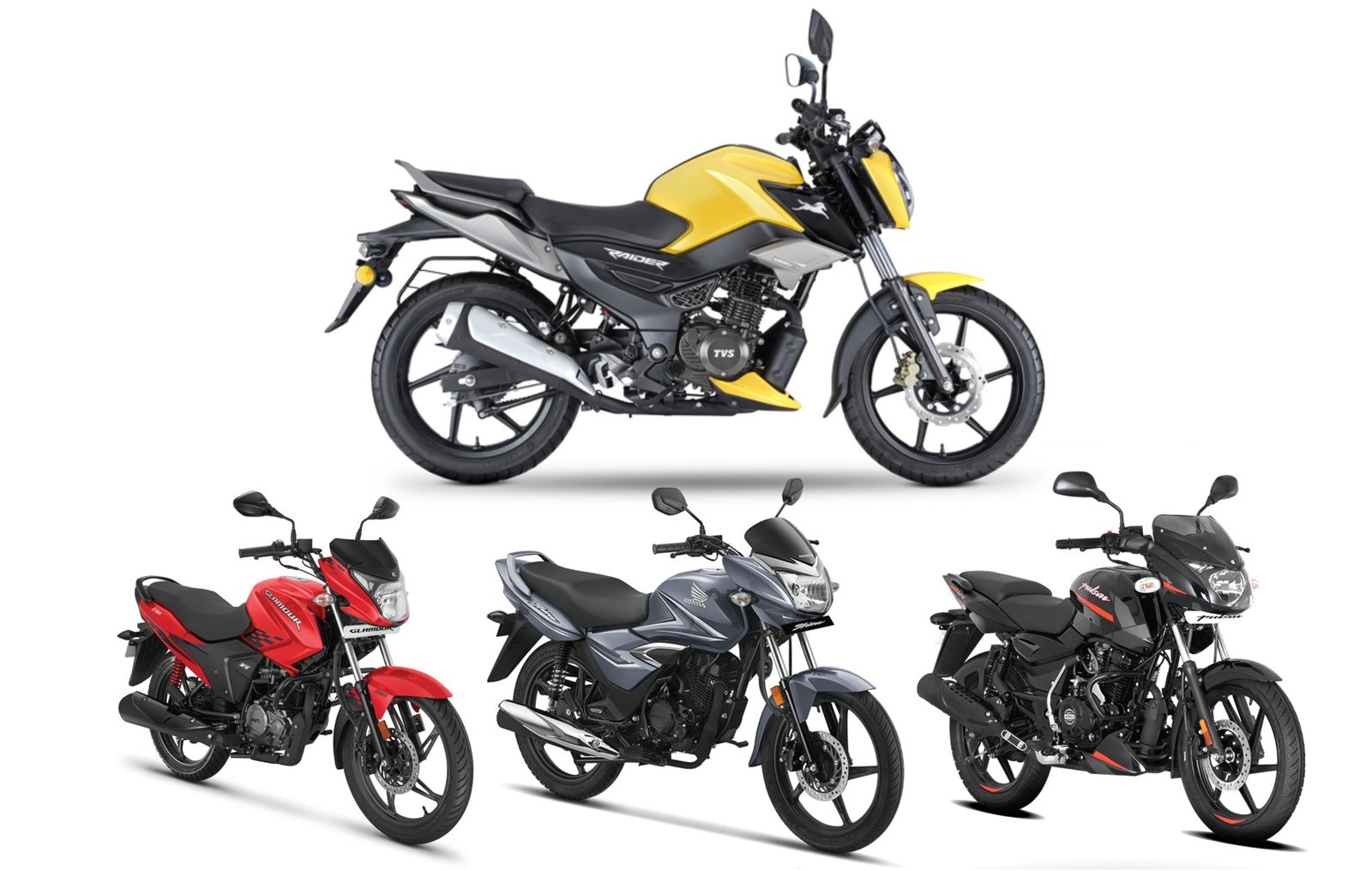
Buying a two-wheeler is one of the most important purchases most people make. Whether it is your first bike, an upgrade, or a replacement for something that finally gave up after years of loyal service, the decision involves real money and affects your daily life. And right now, the market is more confusing than it has ever been.
Walk into a showroom today and you will find scooters starting from under Rs 70,000 and motorcycles going all the way past Rs 30 lakh. Between those two extremes is an enormous range of options from dozens of brands, each promising something slightly different. Budget commuters, mid-range workhorses, premium lifestyle bikes, performance machines, and now electric vehicles competing with petrol ones across almost every segment. It is genuinely hard to know where to look and what to compare.
This blog is going to make that easier. We are going to break the two-wheeler market into clear segments, look at what is available in each one, compare the real value you get for your money, and help you figure out which segment actually makes sense for your situation. No sponsored opinions, no brand loyalty, just a fair and honest look at what your money buys you at each price point.
Understanding How the Market Is Segmented
Before comparing prices, it helps to understand how the two-wheeler market is typically divided. Manufacturers, dealers, and industry analysts tend to segment bikes and scooters by price band and purpose, and these categories have become fairly well established over the years.
The entry level or budget segment covers vehicles priced roughly between Rs 50,000 and Rs 80,000. These are basic commuters designed to be affordable to buy, cheap to run, and easy to maintain. Above that sits the commuter or value segment, roughly Rs 80,000 to Rs 1.25 lakh, where you start getting more features, better performance, and more choice. The mid-range or executive segment runs from around Rs 1.25 lakh to Rs 2 lakh and is where most of the volume in India is sold. Premium bikes occupy the Rs 2 lakh to Rs 5 lakh space, offering significantly better performance, quality, and brand experience. Above Rs 5 lakh is the superpremium and performance segment, which is a smaller but fast-growing market. Electric vehicles now exist across almost all of these price bands and deserve their own comparison within each segment.
These are rough boundaries, and they shift slightly each year as prices change. But the structure helps us make meaningful comparisons.
The Budget Segment: Rs 50,000 to Rs 80,000
This is where the most basic, functional two-wheelers live. If your primary concern is getting from point A to point B reliably and at minimum cost, this is where you look.
In the scooter category, options like the TVS Scooty Pep+, Honda Activa base variant, and Hero Destini 100 sit in this space. These scooters have small engines, usually 100cc or smaller, modest performance, and basic features. They are light, easy to ride, and very economical to run. Fuel efficiency in this segment typically runs between 50 and 65 kilometres per litre under real-world conditions, which keeps the cost of daily use very low.
In the motorcycle category, the Hero HF Deluxe, Bajaj CT100, and TVS Radeon are the dominant names. These are simple, single-cylinder commuter bikes with 100cc engines. They are not exciting, they are not fast, and they do not have many features. But they start reliably every morning, rarely need expensive repairs, and have service centres and spare parts available in virtually every corner of the country, including small towns and rural areas.
What does your money actually buy here? Fundamentally, you are buying reliability and low running cost, not comfort, features, or performance. The build quality is basic. The ride quality is serviceable. The braking, usually drum brakes all around, is adequate for low speeds but not inspiring. Instrumentation is minimal, typically a basic analogue speedometer and fuel gauge with nothing else.
The honest truth about this segment is that the value is real but narrow. If your usage is genuinely limited to short daily commutes in flat terrain, these bikes and scooters do exactly what they promise at a price that almost anyone can manage. But if you find yourself regularly carrying a pillion, riding in hilly areas, joining faster-moving traffic, or doing occasional longer trips, you will quickly feel the limitations.
The Commuter Value Segment: Rs 80,000 to Rs 1.25 Lakh
This is where the market starts to get more interesting. There is a meaningful jump in what your money buys between the bottom of this segment and the budget category above.
Here you find the Honda Activa 6G, TVS Jupiter, Hero Maestro Edge, and Suzuki Access in the scooter space. These are 110cc to 125cc scooters with proper features, better build quality, more comfortable rides, and in some cases the beginning of useful technology like USB charging, LED lighting, and semi-digital instrument clusters.
The Honda Activa 6G deserves special mention because it has earned its position as India’s best-selling two-wheeler through a combination of reliability, refinement, and widespread service availability rather than any flashy feature. For a family scooter used daily by multiple people, its dependability and resale value are real advantages.
On the motorcycle side, the Hero Splendor Plus, Honda Shine, and TVS Raider 125 compete here. The Hero Splendor is perhaps the single most purchased motorcycle in Indian history, and the reason is simple: it does nothing wrong. Fuel efficiency is outstanding, reliability is excellent, and the cost of ownership over five years is among the lowest in any segment. The Honda Shine offers a slightly more refined engine with somewhat better highway composure for a similar price. The TVS Raider 125 brings a more modern design and better features into this price range, and is particularly attractive to younger buyers who want something that looks current without stretching their budget.
What separates this segment from the one below it is primarily refinement, reliability confidence, and features. The engines are smoother, the brakes on many models now include a front disc option, the ride quality is better, and the overall experience is noticeably more polished. If you are choosing between the budget segment and this one and you can stretch the extra Rs 10,000 to Rs 20,000, in most cases it is worth it.
The Mid-Range Executive Segment: Rs 1.25 Lakh to Rs 2 Lakh
This is the segment where the most interesting value conversations happen. The Rs 1.25 lakh to Rs 2 lakh range is large and diverse, and the difference between something at the bottom and something at the top of this bracket is significant.
At the lower end, you have bikes like the Bajaj Pulsar 125, Hero Xtreme 125R, and TVS Apache RTR 160. These offer meaningfully more performance than the pure commuter category, with 160cc single-cylinder engines that are comfortable on the highway and responsive in city traffic. They also bring better braking, typically disc brakes front and rear, proper alloy wheels, and a sportier riding position that younger riders prefer.
Moving up into the Rs 1.5 lakh to Rs 2 lakh zone, things get genuinely exciting. The Bajaj Pulsar 150 and Pulsar N160, the Hero Xtreme 160R, the Honda Hornet 2.0, and the TVS Apache RTR 160 4V all compete here. These are real motorcycles that can handle everything from city commuting to weekend rides to occasional highway trips. They are not luxury items, but they feel properly engineered rather than stripped down.
The TVS Apache RTR 160 4V has been one of the standout value propositions in this segment for years. The dual-channel ABS version offers safety technology that was unheard of at this price not very long ago, and the performance and handling genuinely reward spirited riding. It is one of the few bikes at this price that you can enjoy even when you do not need to go anywhere in particular.
The Bajaj Pulsar N160 is another strong performer in this space, with a more modern design and a refined engine that works well both in traffic and on open roads. Bajaj’s build quality and service network add practical ownership confidence.
At the scooter end of this price range, the Aprilia SR 160, Suzuki Burgman Street, and higher-spec Honda Activa 125 variants compete. The Burgman Street is particularly interesting because it offers maxi-scooter ergonomics at a mainstream price, with a very comfortable upright riding position and excellent under-seat storage that genuinely improves daily usability.
The Premium Segment: Rs 2 Lakh to Rs 5 Lakh
This is where the character of the market changes significantly. Below Rs 2 lakh, most purchases are primarily driven by utility and value for money. Above Rs 2 lakh, buyers are increasingly making choices driven by preference, lifestyle, and experience.
At the entry of this segment, around Rs 2 lakh to Rs 2.5 lakh, you find the Royal Enfield Hunter 350, the Honda CB300R, and the KTM 125 Duke. These are bikes with genuine character and significantly better engineering than the commuter segment. The Royal Enfield Hunter 350 has been a remarkably successful product because it brings the Royal Enfield brand experience and the J-series 350cc single engine into a lighter, more city-friendly package at a price that is accessible for what you are getting. The ride quality, engine smoothness, and overall experience are genuinely on a different level from anything below Rs 2 lakh.
Moving further up into Rs 2.5 lakh to Rs 4 lakh, the Royal Enfield Classic 350 and Meteor 350, the Bajaj Dominar 400, the KTM 200 Duke and 250 Duke, and the Suzuki Gixxer SF 250 all compete. This is a rich field of genuinely good motorcycles, and choosing between them requires thinking clearly about what kind of riding you actually do.
The Royal Enfield Meteor 350 is perhaps the most complete all-rounder in this range. It tours comfortably, looks great, has excellent build quality, and the riding experience is relaxed and enjoyable without being boring. The service network is extensive and the community around Royal Enfield adds a social dimension to ownership that other brands struggle to match.
The KTM 200 Duke and 250 Duke are very different in character. They are sharp, aggressive, and rewarding for riders who want a more performance-focused experience. The KTM feel is about precision and energy rather than relaxed cruising. If you mostly ride in the city and enjoy carving through traffic quickly, these make a strong case for themselves.
The Bajaj Dominar 400 is a unique proposition because it offers real long-distance touring capability at a price that seems almost too good. The 373cc single-cylinder engine is torquey, the bike is stable at highway speeds, and the overall package is more complete for touring than almost anything else at this price point.
At the top of this segment, approaching Rs 4 lakh to Rs 5 lakh, you find the Royal Enfield Himalayan 450, the KTM 390 Duke, the KTM 390 Adventure, and the BMW G 310 R and G 310 GS. These represent a significant step up in engineering sophistication. The KTM 390 series in particular has a genuinely international feel and specification, with electronics packages, braking performance, and engine quality that would not be out of place in bikes costing considerably more.
The Superpremium Segment: Above Rs 5 Lakh
Once you cross Rs 5 lakh, you are in a different world in terms of what you get and who is buying. Volume drops significantly but the quality and experience offered rises steeply.
From Rs 5 lakh to Rs 10 lakh, you have bikes like the Royal Enfield Super Meteor 650, the KTM 890 Duke, the Kawasaki Ninja 300 and Z400, the Triumph Speed 400, and the Harley-Davidson X440. These are genuinely premium products with internationally competitive engineering.
The Triumph Speed 400 deserves particular mention because it arrived as a strong value proposition in a segment that had become dominated by Royal Enfield. The Triumph name, the engine character, the handling, and the overall quality feel make it genuinely competitive, and it has found a receptive audience among buyers who want something different from the usual options.
Above Rs 10 lakh, the market includes the Kawasaki Z650, the BMW F 900 R, the Honda CB650R, the Ducati Scrambler, and the Royal Enfield Continental GT 650. These bikes are the domain of serious enthusiasts and buyers for whom two-wheel transport is a genuine passion rather than primarily a practical decision.
Electric Vehicles: Where They Fit in Each Segment
Electric two-wheelers now exist across multiple price segments, and comparing them to their petrol equivalents requires thinking slightly differently because the cost equation works differently.
In the budget to commuter segment, electric scooters like the Bajaj Chetak base variant, the Hero Vida V1, and various smaller brands compete with petrol scooters in the Rs 80,000 to Rs 1.25 lakh range after subsidies. The upfront cost is comparable to or slightly higher than petrol alternatives, but the running cost difference is significant. Electricity is much cheaper than petrol per kilometre, and electric scooters have fewer moving parts, meaning lower maintenance costs over time.
In the mid-range segment, the Ather 450X, TVS iQube ST, and Ola S1 Pro compete at prices between Rs 1.3 lakh and Rs 1.6 lakh. These are genuinely well-engineered products with real-world ranges between 100 and 150 kilometres that make them practical for daily urban use and occasional longer runs. The feature packages on these scooters, including large touchscreen displays, navigation, ride data, and connected apps, are richer than most petrol competitors at the same price.
The honest comparison between electric and petrol in these segments comes down to your usage pattern and your charging situation. If you have a reliable place to charge at home and your daily usage is within the range, an electric scooter in the Rs 1.3 lakh to Rs 1.6 lakh bracket offers compelling value because the monthly running cost is dramatically lower than petrol. If you live in an apartment without dedicated parking and a charging point, or if your usage is irregular and sometimes high mileage, petrol still makes more practical sense.
Comparing Value Across Segments: The Honest Assessment
Having walked through each segment, let us be honest about where you actually get the best value for your money at different budget points.
If your budget is under Rs 80,000, the Hero Splendor Plus or Honda Activa 110 are the safe choices. They are not the most exciting options but they are genuinely reliable and have the lowest total cost of ownership in their respective categories.
If your budget extends to Rs 1.25 lakh, the TVS Jupiter 125 or Honda Activa 6G in the scooter space, and the Honda Shine 125 or TVS Raider 125 in the motorcycle space, offer noticeably better experiences than the budget segment for a modest additional investment.
If you can stretch to Rs 1.5 lakh to Rs 2 lakh, this is where you start getting bikes that are genuinely enjoyable rather than merely functional. The TVS Apache RTR 160 4V or Bajaj Pulsar N160 represent strong value and real riding reward at this price.
Between Rs 2 lakh and Rs 3 lakh, the Royal Enfield Hunter 350 and the KTM 200 Duke are the standout value propositions depending on whether you prefer relaxed character or sharp performance. Both deliver a genuinely premium experience for their price.
From Rs 3 lakh to Rs 5 lakh, the KTM 390 Duke is the standout for riders who want the most technically advanced motorcycle at that price. The Royal Enfield Meteor 350 wins for anyone prioritising comfort, touring ability, and the ownership community.
Above Rs 5 lakh, value becomes less about specifications per rupee and more about the specific experience each bike offers. At this level, buy what genuinely excites you and suits your riding style.
Making the Decision: What Segment Is Right for You
The best segment is not the most expensive one you can afford. It is the one that matches what you actually need the bike or scooter to do.
If you ride mostly short distances in the city, carrying a single helmet and stopping frequently, a mid-range 125cc scooter at Rs 80,000 to Rs 1.25 lakh probably serves you better than a performance motorcycle costing three times as much. The scooter is more convenient, more comfortable in traffic, and cheaper to run.
If you do a mix of city commuting and weekend highway rides, the Rs 1.5 lakh to Rs 2.5 lakh segment offers the best balance. You get a bike that handles daily use without fuss but is also capable and enjoyable when you want to open it up a bit.
If riding is a passion and not just transport, stretch your budget into the premium segment where the engineering, character, and experience are qualitatively different from what is below. A Royal Enfield, KTM, or Triumph at Rs 2.5 lakh to Rs 5 lakh is not just faster than a commuter bike. It feels different in a way that makes every ride more enjoyable.
The Bottom Line
Price comparisons are most useful when they help you stop looking at what everyone else is buying and start thinking clearly about what you actually need. The best-selling bike is not always the best choice for you. The most expensive option is not always the most value-conscious one.
Know your actual daily usage, your budget including insurance and maintenance, your charging situation if considering electric, and what matters most to you in a riding experience. Then find the segment where those factors line up, and within that segment, find the specific model that delivers the best package for your particular needs.
Two-wheelers are one of the few purchases that can genuinely improve your daily life if you get the choice right. The market in 2025 is better than it has ever been across almost every segment. There has never been a time when more good options existed at more accessible price points.
Take your time, do the comparison properly, and choose something you will be happy to ride every single day.