
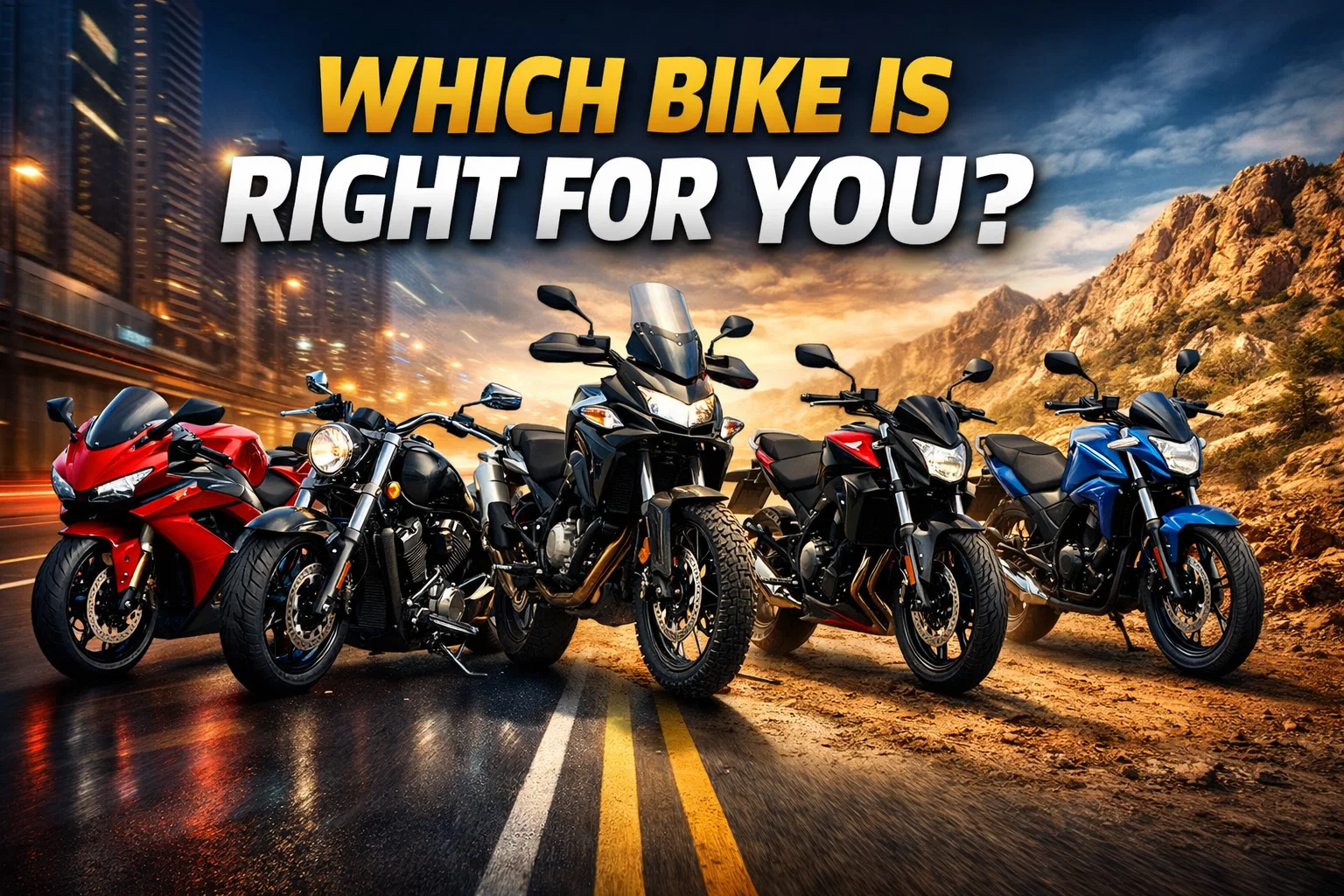
Motorcycles are not one size fits all machines. Every motorcycle is designed with a specific purpose riding style and rider need in mind. For buyers especially beginners understanding different bike types and segments is essential before making a purchase. Choosing the wrong segment can lead to discomfort poor performance for your usage and unnecessary expenses.
At bikebuyingguide our aim is to help riders clearly understand the different types of motorcycles available today. This guide explains every major bike segment its features benefits limitations and ideal rider profile so you can make an informed and confident decision.
Why Understanding Bike Types and Segments Is Important
Many buyers focus only on engine size or brand name. However the bike segment matters just as much.
Different segments suit different riding needs
Comfort and handling vary by design
Maintenance and running costs differ
Safety and control depend on bike type
Knowing segments helps match the bike to your lifestyle.
How Motorcycle Segments Are Classified
Motorcycle segments are generally classified based on design purpose riding posture engine tuning and usage.
Urban commuting
Sport riding
Leisure cruising
Long distance touring
Off road and adventure riding
Each segment prioritizes different features.
Commuter Motorcycles
Commuter motorcycles are designed for everyday use and practicality.
Key Characteristics of Commuter Bikes
Lightweight and easy to handle
Good fuel efficiency
Simple mechanical design
Comfortable upright seating
These bikes are reliable and economical.
Who Should Choose a Commuter Bike
Daily office commuters
Beginner riders
Budget conscious buyers
Commuter bikes are ideal for city traffic.
Pros of Commuter Motorcycles
Low purchase cost
Low maintenance
High mileage
Cons of Commuter Motorcycles
Limited performance
Basic features
Not ideal for long highway rides
Commuters prioritize practicality over excitement.
Street and Naked Motorcycles
Street bikes also known as naked bikes offer balanced performance and versatility.
Key Characteristics of Street Bikes
Upright riding posture
Moderate engine power
Minimal body panels
Good city and highway performance
They are popular among new and experienced riders.
Who Should Choose a Street Bike
Beginner riders upgrading from commuters
Riders who want versatility
Urban and occasional highway riders
Street bikes balance comfort and power.
Pros of Street Motorcycles
Easy handling
Comfortable seating
Versatile usage
Cons of Street Motorcycles
Limited wind protection
Less sporty appearance
Street bikes are practical all rounders.
Sport Motorcycles
Sport motorcycles are built for speed performance and aggressive riding.
Key Characteristics of Sport Bikes
High revving engines
Aggressive riding posture
Full body fairings
Advanced braking and suspension
They deliver thrilling performance.
Who Should Choose a Sport Bike
Experienced riders
Performance enthusiasts
Track focused riders
Sport bikes demand skill and control.
Pros of Sport Motorcycles
Excellent acceleration
Superior handling
Sporty design
Cons of Sport Motorcycles
Uncomfortable for long rides
High maintenance cost
Not beginner friendly
Sport bikes prioritize performance over comfort.
Cruiser Motorcycles
Cruisers are designed for relaxed comfortable riding.
Key Characteristics of Cruiser Bikes
Low seat height
Relaxed foot forward posture
Smooth torque oriented engines
Classic styling
They offer a laid back riding experience.
Who Should Choose a Cruiser Bike
Riders who prefer comfort
Leisure riders
Long relaxed trips
Cruisers focus on enjoyment rather than speed.
Pros of Cruiser Motorcycles
Comfortable seating
Easy handling at low speeds
Stylish appearance
Cons of Cruiser Motorcycles
Heavy weight
Limited cornering ability
Lower fuel efficiency
Cruisers are best for relaxed riding.
Touring Motorcycles
Touring motorcycles are built for long distance travel.
Key Characteristics of Touring Bikes
Large engines
Comfort oriented design
Wind protection
Luggage carrying capacity
They are designed for endurance.
Who Should Choose a Touring Bike
Highway travelers
Long distance riders
Adventure seekers
Touring bikes handle long journeys easily.
Pros of Touring Motorcycles
Excellent comfort
High stability
Large fuel range
Cons of Touring Motorcycles
High cost
Heavy weight
Less suitable for city traffic
Touring bikes excel on highways.
Adventure Motorcycles
Adventure bikes combine road and off road capabilities.
Key Characteristics of Adventure Bikes
Tall stance
Long suspension travel
Upright seating
Durable build
They handle mixed terrains.
Who Should Choose an Adventure Bike
Riders who enjoy exploration
Long distance travelers
Off road enthusiasts
Adventure bikes suit varied terrain.
Pros of Adventure Motorcycles
Versatility
Comfort on long rides
Good ground clearance
Cons of Adventure Motorcycles
Tall seat height
Heavy for beginners
Higher price
Adventure bikes are built for exploration.
Dirt and Off Road Motorcycles
Off road bikes are designed for trails and rough terrain.
Key Characteristics of Off Road Bikes
Lightweight frame
High suspension travel
Knobby tires
Minimal road equipment
They are not street focused.
Who Should Choose an Off Road Bike
Trail riders
Motocross enthusiasts
Off road learners
Off road bikes require special riding areas.
Pros of Off Road Motorcycles
Excellent maneuverability
Strong suspension
Fun riding experience
Cons of Off Road Motorcycles
Not road legal in many regions
Limited comfort
Frequent maintenance
Off road bikes are purpose built machines.
Dual Sport Motorcycles
Dual sport bikes combine road legality with off road ability.
Key Characteristics of Dual Sport Bikes
Street legal equipment
Off road capable suspension
Lightweight design
They bridge two worlds.
Who Should Choose a Dual Sport Bike
Riders who want versatility
Mixed terrain riders
Dual sport bikes offer flexibility.
Pros of Dual Sport Motorcycles
Road and trail capability
Lightweight handling
Cons of Dual Sport Motorcycles
Compromised comfort
Limited highway performance
Dual sport bikes suit adventurous riders.
Scooter and Automatic Motorcycles
Scooters focus on ease of use and convenience.
Key Characteristics of Scooters
Automatic transmission
Step through design
Storage space
Comfortable seating
They are beginner friendly.
Who Should Choose a Scooter
City commuters
Beginner riders
Riders seeking convenience
Scooters simplify riding.
Pros of Scooters
Easy to ride
Low maintenance
Good fuel efficiency
Cons of Scooters
Limited power
Not suitable for long rides
Scooters excel in urban environments.
Electric Motorcycles and Scooters
Electric bikes are gaining popularity.
Key Characteristics of Electric Bikes
Zero emissions
Instant torque
Low running cost
They represent future mobility.
Who Should Choose Electric Bikes
Urban riders
Eco conscious buyers
Electric bikes suit city usage.
Pros of Electric Motorcycles
Low maintenance
Silent operation
Environment friendly
Cons of Electric Motorcycles
Limited range
Charging infrastructure dependency
Electric bikes are evolving rapidly.
Choosing the Right Bike Segment Based on Usage
Usage should guide your choice.
City commuting favors commuter bikes or scooters
Weekend rides suit street or cruiser bikes
Long travel favors touring or adventure bikes
Performance riding suits sport bikes
Matching usage prevents regret.
Choosing Bike Segment Based on Experience Level
Experience matters greatly.
Beginners should choose commuters street bikes or scooters
Intermediate riders can explore cruisers or adventure bikes
Experienced riders can handle sport or touring bikes
Skill level affects safety.
Budget Considerations Across Bike Segments
Different segments come with different costs.
Commuter bikes are affordable
Sport and touring bikes are expensive
Adventure bikes fall in mid to high range
Budget planning is essential.
Maintenance Differences Between Bike Segments
Maintenance varies by design.
Simple bikes require less maintenance
Performance bikes require frequent servicing
Touring bikes have higher upkeep
Maintenance impacts ownership cost.
Resale Value Across Different Segments
Resale varies by popularity.
Commuter bikes have strong resale
Popular street bikes sell easily
Niche segments may depreciate faster
Resale matters when upgrading.
Common Mistakes Buyers Make When Choosing Bike Segments
Avoid these mistakes.
Choosing style over comfort
Ignoring riding experience level
Buying powerful bikes too early
Not considering daily usage
Smart choices improve satisfaction.
How bikebuyingguide Helps You Understand Bike Segments
At bikebuyingguide we simplify complex decisions.
Clear segment explanations
Beginner friendly guidance
Usage based recommendations
We help riders choose wisely.
Final Thoughts on Bike Types and Segments Explained
Understanding bike types and segments is the foundation of making the right motorcycle buying decision. Each motorcycle segment is designed with a specific purpose and riding style in mind. Choosing a bike that matches your usage experience level and comfort needs ensures long term satisfaction and safety.
Whether you are a beginner looking for a commuter bike an enthusiast seeking performance or a traveler planning long journeys understanding segments helps narrow down options and avoid costly mistakes. Take time to evaluate your needs test ride different bikes and prioritize comfort and usability over appearance.
Stay connected with bikebuyingguide for trusted buying advice detailed guides and expert insights that help you choose the perfect motorcycle segment for your riding journey. Ride informed ride confident and enjoy every ride ahead.