
When you decide to buy a new vehicle, whether it is a sleek sports car, a rugged truck, or a sensible family sedan, the excitement can be overwhelming. You picture yourself driving it, the smell of the new interior, and the freedom of the open road. However, behind that shiny paint and new car smell, there are two financial pillars that will determine if this purchase is a dream or a burden. These two pillars are financing and resale value. Most people treat them as separate things. They think about the monthly payment today, and they worry about selling the car years later. But the truth is, financing and resale value are deeply connected. They act like a seesaw. If you get one wrong, the other one can hurt you. If you master both financing and resale value, you can drive the cars you love without destroying your bank account.
In this guide, we are going to explore the critical relationship between how you pay for your car and what it is worth when you sell it. We will look at interest rates, loan terms, depreciation, and maintenance. We will use simple, plain English to explain complex financial concepts so you can make the best decision for your wallet. Understanding financing and resale value is the secret to building wealth while still enjoying the ride.
Understanding the Link Between Financing and Resale Value
To begin, we must define what we mean by financing and resale value. Financing is the money side of buying. It includes your loan, your interest rate, your monthly payment, and the length of time you take to pay it back. Resale value is the money side of selling. It is how much cash someone is willing to give you for your car three, five, or ten years down the road. The relationship between financing and resale value is simple: you want the cost of financing to be low, and the resale value to be high.
If you take out a loan with a high interest rate, you end up paying thousands of dollars more than the car is actually worth. The car does not care how much interest you paid. When you go to sell it, the buyer only cares about the market price. This gap between what you paid (price plus interest) and what you get back (market price) is your “total cost of ownership.” If you ignore the connection between financing and resale value, you might find yourself in a situation where you owe the bank $15,000 for a car that is only worth $10,000. This is called being “underwater” or having “negative equity,” and it is the worst-case scenario for financing and resale value.
How Interest Rates Affect Your Financing and Resale Value Equation
Interest rates are the price you pay to borrow money. When you look at financing and resale value, the interest rate acts like a weight dragging you down. Let’s say you buy a car for $30,000. If you get a 0% interest loan, you pay exactly $30,000. If the car’s resale value after five years is $15,000, your total cost was $15,000. That is a decent balance of financing and resale value.
Now, imagine you have bad credit and get a 10% interest rate. Over five years, you might pay $8,000 in interest. Now your total cost is $38,000. The car is still only worth $15,000 when you sell it. Your cost is now $23,000. The resale value didn’t change, but the bad financing made the loss much bigger. This is why shopping for the best loan is just as important as shopping for the car. A lower interest rate protects your financing and resale value equation. It ensures that more of your monthly payment goes toward owning the car (principal) rather than just renting the money (interest). Keeping interest low is the first step to winning the game of financing and resale value.
The Danger of Long Term Loans on Financing and Resale Value
In recent years, cars have become more expensive. To make the monthly payments look affordable, banks have started offering longer loans. You used to see 36 or 48-month loans. Now, it is common to see 72, 84, or even 96-month loans. While a lower monthly payment looks nice, these long loans are poison for your financing and resale value.
Here is why. Cars lose value (depreciate) very fast in the first few years. If you take out an 84-month loan, you are paying off the debt very slowly. The car’s value is dropping faster than your loan balance. For the first three or four years, you will owe more than the car is worth. If you try to sell the car or trade it in during this time, you will have to write a check to cover the difference. This destroys your financing and resale value strategy. You are stuck in the car because you cannot afford to sell it. To protect your financing and resale value, try to stick to the “20/4/10” rule: put 20% down, finance for no more than 4 years, and keep payments under 10% of your income. This keeps you ahead of the depreciation curve.
Why Depreciation is the Enemy of Financing and Resale Value
Depreciation is the decline in a car’s value over time. It is the single biggest cost of owning a car, bigger than gas, insurance, or repairs. When you consider financing and resale value, depreciation is the variable you cannot fully control, but you can predict. New cars lose about 20% of their value the moment you drive them off the lot. By the end of the first year, they might lose 30%. By year three, they are often worth half of what you paid.
This steep drop is vital for your financing and resale value planning. If you finance a car that depreciates heavily (like a luxury sedan), your resale value will be terrible. If you finance a car that holds its value well (like a pickup truck or a Toyota), your resale value will be strong. Smart buyers look at “residual value” charts before they buy. They choose cars that depreciate slowly. This creates a safety buffer. Even if you have a slightly higher interest rate, a car with strong resale value can save you money in the long run. The combination of smart financing and resale value awareness means buying assets that hold their worth.
Choosing the Right Brand for Better Financing and Resale Value
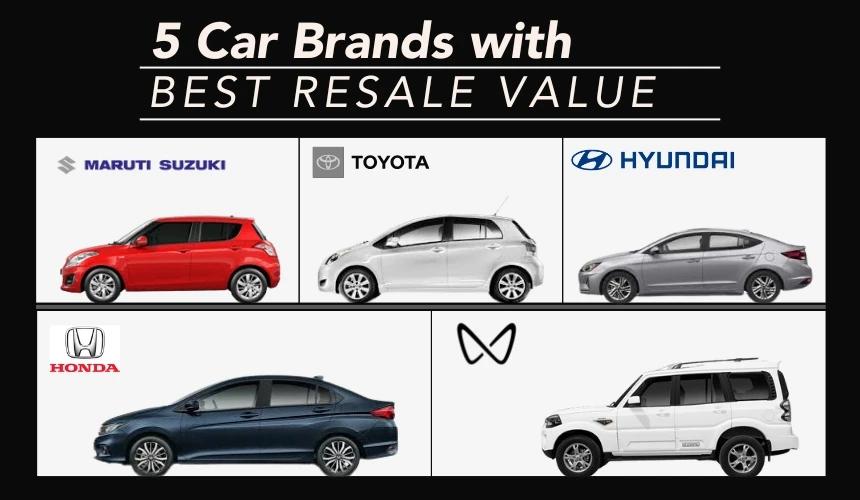
Not all cars are created equal. The brand on the grill has a massive impact on your financing and resale value. Some brands have a reputation for reliability and longevity. Brands like Toyota, Honda, and Subaru are famous for high resale values. People trust them to run for 200,000 miles, so used car buyers pay a premium for them. This helps your financing and resale value math.
On the other hand, some luxury brands or brands with poor reliability ratings drop like a stone. A $100,000 luxury car might be worth $30,000 in five years. That is a loss of $70,000. If you financed that $100,000, you are paying interest on a rapidly shrinking asset. This is a poor financing and resale value decision unless you have money to burn. When you are shopping, look at the “5-Year Cost to Own” data. This data combines the cost of financing and resale value projections to tell you the truth about the car’s price. Sometimes, a more expensive car with great resale value is actually cheaper to own than a cheap car with terrible resale value.
The Role of Down Payments in Protecting Financing and Resale Value
One of the best tools you have to manage financing and resale value is the down payment. A down payment is the cash you pay upfront. It reduces the amount you have to borrow. Many people try to put “zero down” to keep their cash in the bank. While this sounds good, it is risky for your financing and resale value.
When you put zero down, you are financing the entire cost of the car, plus taxes and fees. You start immediately underwater. If the car gets totaled in an accident a month later, the insurance check (which is based on resale value) might not cover the loan payoff. You would be left paying for a dead car. A substantial down payment (ideally 20%) gives you immediate equity. It ensures that the loan balance is always lower than the car’s resale value. This gives you freedom. If you lose your job or need a bigger car, you can sell the vehicle, pay off the loan, and walk away with some cash in your pocket. That flexibility is the ultimate goal of good financing and resale value management.
Leasing versus Buying Impact on Financing and Resale Value
Leasing is a different beast entirely. When you lease, you are basically renting the car for three years. You are paying for the depreciation that happens during that time. How does this fit into financing and resale value? In a lease, the “resale value” is pre-determined. It is called the “residual value.” The bank guesses what the car will be worth in three years, and your monthly payments are based on the difference between the sale price and that residual value.
If you lease a car with terrible resale value, your lease payments will be huge because you are paying for that big drop. If you lease a car with great resale value, your payments will be lower. So, financing and resale value principles still apply to leasing. The benefit of leasing is that you transfer the risk of resale value to the bank. If the car market crashes or the car turns out to be a lemon, you can just hand the keys back at the end of the lease. You don’t have to worry about selling it. However, you also have no asset at the end. Buying builds equity; leasing pays for usage. Understanding this distinction is key to your financing and resale value strategy.
Maintenance Records and Their Effect on Financing and Resale Value
We often think of maintenance as a mechanical issue, but it is also a financial one. How you take care of the car has a direct impact on your financing and resale value. When you go to sell or trade in your car, the buyer wants proof that it was loved. A car with a thick folder of service records—oil changes, tire rotations, fluid flushes—is worth more than a mystery car.
A well-maintained car commands a higher price. This higher price helps you pay off whatever is left of your financing. Furthermore, if you plan to refinance your car loan to get a better rate (improving your financing), the bank might look at the car’s value. A car in poor condition is worth less, which might make refinancing difficult. Keeping the car clean, fixing small dents, and sticking to the service schedule preserves the asset. It is an investment in your future financing and resale value success. Think of every oil change not just as engine protection, but as wallet protection.
Modifications and How They Hurt Financing and Resale Value
Car enthusiasts love to customize their rides. They add big wheels, loud exhausts, and custom stereos. While this is fun, it is usually a disaster for financing and resale value. Generally, modifications do not add value to a car. In fact, they lower the value. Most buyers want a stock, original car. They don’t want someone else’s project. They worry that a modified car was driven hard or abused.
From a financing perspective, banks do not like to lend money on heavily modified cars. It is hard for them to determine the true value. If you try to trade in a modified car, the dealer will often offer you much less than the book value because they have to spend money to return it to stock. If you want to maximize your financing and resale value, keep the car original. If you must modify it, keep the original parts so you can swap them back before you sell. This simple step can save you thousands of dollars and keep your financing and resale value equation healthy.
Conclusion Mastering Financing and Resale Value
At the end of the day, a vehicle is likely the second most expensive thing you will ever buy, right after a house. It requires a significant amount of your hard-earned money. By taking the time to understand the interplay between financing and resale value, you are taking control of your financial future. You are moving from being a passive consumer to a smart investor.
Remember the key takeaways. Shop for the lowest interest rate to keep financing costs down. Choose a car with a strong reputation to keep resale value high. Avoid long-term loans that trap you in debt. Put a healthy down payment to stay above water. And take care of the machine so it holds its worth. When you treat financing and resale value as a single, combined concept, you make better decisions. You stop looking at just the monthly payment and start looking at the total picture.
Driving a nice car is a pleasure. Driving a nice car that you bought smartly, financed cheaply, and sold for a profit is a triumph. Use this guide as your roadmap. Navigate the twists and turns of dealerships and banks with confidence. Your bank account will thank you, and you will enjoy the drive knowing that you have mastered the art of financing and resale value. Whether you are buying today or planning for next year, keep these principles in mind and watch your automotive wealth grow.
Gemini is AI and can make mistakes.