
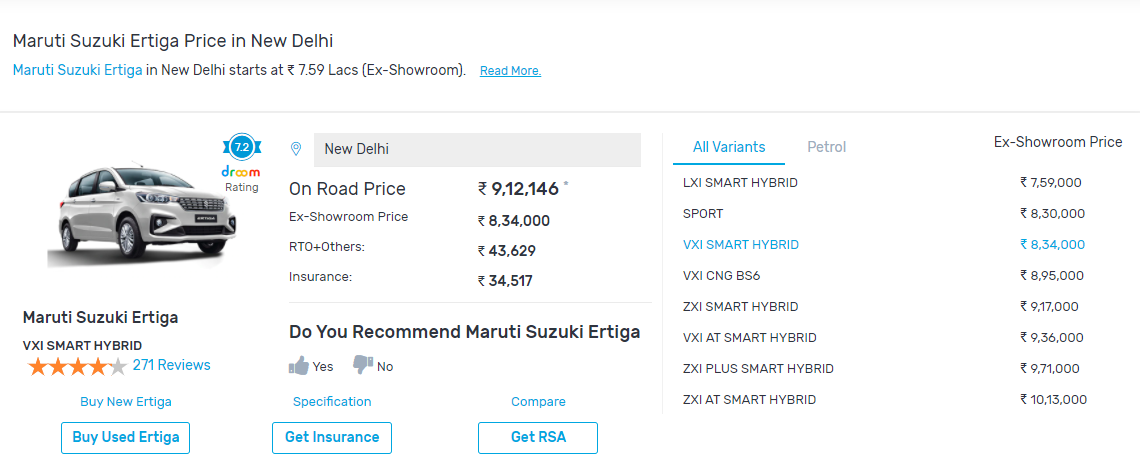
Buying a new car is a dream come true for many of us. You see a beautiful advertisement on television or scrolling through your phone, and the price looks perfect for your budget. You get excited. You start planning your road trips and the music you will play. You walk into the dealership with a smile, ready to sign the papers. But then, the salesperson hands you a piece of paper with the final amount, and your jaw drops. The number is significantly higher than what you saw in the ad. You wonder if there has been a mistake. This is not a mistake; this is the difference between the showroom price and the actual price you pay to drive the car home. This is why understanding the on road price breakdown is the most important part of buying a vehicle.
Many first-time buyers are confused by the extra costs added to the bill. They assume the price tag on the windshield is what they will pay. In reality, that price is just the starting point. There are taxes, insurance premiums, registration fees, and hidden charges that pile up quickly. If you do not understand the on road price breakdown, you might end up overspending or buying a car that stresses your monthly budget. By learning how to read this breakdown, you gain power. You can negotiate better, you can spot unnecessary charges, and you can save your hard-earned money. In this guide, we are going to dissect the bill. We will look at every single component that makes up the final cost, using simple English to demystify the process.
Understanding the Ex-Showroom Price in the On Road Price Breakdown
The first and biggest chunk of your on road price breakdown is the Ex-Showroom Price. This is the number you usually see in advertisements. It represents the cost of the car itself, including the manufacturer’s cost and the dealer’s profit margin, plus the Goods and Services Tax (GST) paid by the dealer to the government. Think of this as the price of the metal, the engine, and the seats sitting on the showroom floor.
However, you cannot drive the car on public roads paying just this amount. The Ex-Showroom price does not include the permission to use the roads, the safety coverage, or the fuel. It is merely the cost to transfer ownership of the object from the dealer to you. When you are doing your initial research, the Ex-Showroom price is good for comparing different cars, but it is terrible for budgeting. A car with an Ex-Showroom price of 10 Lakhs might have a final on road price breakdown of 12 or 13 Lakhs depending on your city. Therefore, never set your budget based solely on this number. Always ask the dealer for the “Proforma Invoice” immediately so you can see the detailed on road price breakdown before you get emotionally attached to the vehicle.
Registration and RTO Charges in the On Road Price Breakdown
The second largest component in any on road price breakdown is the Registration and RTO (Regional Transport Office) charges. In simple terms, this is the Road Tax. You are paying the government for the right to drive your new car on public roads. This fee is mandatory. You cannot negotiate it, and you cannot skip it. If you drive without paying this, your car is illegal and will be seized.
The amount you pay depends heavily on where you live. Different states and cities have different tax rates. For example, the on road price breakdown for a car in Delhi might be very different from the same car in Mumbai or Bangalore because the state road tax varies. Usually, this tax is calculated as a percentage of the Ex-Showroom price. It can range anywhere from 4% to over 20% depending on the fuel type (petrol, diesel, electric) and the price bracket of the car. Electric vehicles often have lower RTO charges to encourage green driving, which significantly lowers their overall on road price breakdown. This section also includes the cost of the smart card registration certificate and the number plate fees. While you cannot haggle here, checking that the dealer has applied the correct percentage for your vehicle category is a smart move to ensure your on road price breakdown is accurate.
The Impact of Car Insurance on Your On Road Price Breakdown
Safety comes next. The third major pillar of the on road price breakdown is Car Insurance. By law, you must have at least “Third Party” insurance to drive on the road. This covers damages you cause to others. However, most new cars are sold with “Comprehensive” insurance, which covers damages to your own car as well.
This is an area where dealers often make a lot of profit. When you look at the insurance quote in the dealer’s on road price breakdown, it might seem very high. This is because they often include expensive add-ons like “Zero Depreciation,” “Engine Protect,” or “Return to Invoice” coverage, and they might charge a premium for the convenience of buying it from them. You have the right to buy insurance from outside. You can go online, compare quotes from different insurance companies, and often find a policy that is 30% to 40% cheaper than what the dealer is offering. If you show this cheaper quote to the dealer, they will often match it to keep your business. Paying attention to the insurance line item in your on road price breakdown is one of the easiest ways to save ten to twenty thousand rupees instantly without sacrificing any quality.
Tax Collected at Source TCS in the On Road Price Breakdown
There is a sneaky little charge that appears in the on road price breakdown for more expensive cars, and it often confuses buyers. This is called TCS, or Tax Collected at Source. The government mandates that for any car with an Ex-Showroom value exceeding 10 Lakhs, the dealer must collect 1% of the value as tax.
This is not an extra cost in the long run, but it is an upfront cost in your on road price breakdown. Think of it like an advance payment of your income tax. When you file your income tax returns at the end of the year, you can claim this amount back or use it to offset your tax liability. However, at the moment of buying the car, you have to pay it. Many buyers get angry when they see this, thinking the dealer is cheating them. It is important to know that this is a statutory levy. If your car is priced under 10 Lakhs, you will not see this in your on road price breakdown. Understanding TCS prevents arguments at the dealership and helps you plan your cash flow better.
Handling and Logistics Charges in the On Road Price Breakdown
Now we enter the controversial territory of the on road price breakdown. You might see a line item called “Handling Charges,” “Logistics Charges,” or “Depot Charges.” This is supposed to cover the cost of transporting the car from the factory to the dealership, cleaning it, and preparing it for delivery.
Here is the truth: in many places, consumer courts and transport departments have ruled that these charges are illegal. The dealer’s margin (profit) included in the Ex-Showroom price is supposed to cover these costs. However, many dealers still try to add it to the on road price breakdown. It might range from 5,000 to 20,000 rupees. If you see this charge, you should question it. Ask the dealer to remove it or explain why it is there. Often, if you push back, they will waive this fee or give you free accessories of equivalent value to balance it out. Being aware of this dubious addition to the on road price breakdown gives you leverage during negotiation. It is your money, and you shouldn’t pay for the dealer’s overheads if you don’t have to.
Extended Warranty and Service Packs in the On Road Price Breakdown
As you move down the list of the on road price breakdown, you will see optional items that the dealer strongly recommends. The most common are Extended Warranty and Service Maintenance Packs. The standard warranty might cover your car for 3 years. An extended warranty pushes that to 5 or 7 years.
Is this a necessary part of the on road price breakdown? That depends on you. If you plan to keep the car for a long time (more than 5 years), an extended warranty is excellent peace of mind. It protects you from expensive engine or gearbox failures later in the car’s life. However, if you change cars every 3 years, paying for a 5-year warranty is a waste of money because you will sell the car before using it. Similarly, prepaid service packs lock in today’s prices for future oil changes. These are legitimate costs, but they are optional. Dealers often bundle them into the final price without asking. Check your on road price breakdown carefully. If you do not want the extended warranty yet, you can usually buy it later, before the standard warranty expires. You can ask to remove it from the current bill to lower your immediate payment.
Accessories and Essential Kits in the On Road Price Breakdown
Another area where the on road price breakdown gets inflated is the “Essential Accessory Kit.” Dealers will often add a standard cost, say 10,000 or 50,000 rupees, for accessories. This usually includes floor mats, mud flaps, perfume, and maybe a car cover or some chrome garnishes.
While you definitely need floor mats and mud flaps, you might not want the chrome door handles or the specific seat covers they have chosen. The “Basic Kit” is often overpriced compared to buying these items from a car accessory shop outside. You have the right to customize this. Look at the accessory list in the on road price breakdown. Pick only the items you actually need. Tell the dealer to remove the rest. Do not feel pressured to buy the full kit just because it is printed on the quote. By cherry-picking your accessories, you can shave thousands off the final on road price breakdown and use that money to buy better quality gear elsewhere.
FASTag and Hypothecation Charges in the On Road Price Breakdown
There are a few smaller, miscellaneous charges in the on road price breakdown that are mandatory but small. One is the FASTag fee. In India, for example, new cars must be sold with a FASTag (electronic toll collection tag) already fitted. This usually costs around 500 to 600 rupees. It is a necessary convenience for highway driving.
Another charge you will see if you are taking a loan is “Hypothecation Charges.” This is a fee paid to the RTO to note on your registration certificate that the car is financed by a bank. It essentially marks the car so you cannot sell it without the bank’s permission. This fee typically ranges from 1,500 to 3,000 rupees. While small, these contribute to the total. Sometimes dealers inflate the hypothecation fee in the on road price breakdown to add a little margin. It is worth knowing the actual government fee in your state so you can verify if the dealer is charging you fairly or adding a markup.
Green Cess and State Specific Levies in the On Road Price Breakdown
Depending on where you live, your on road price breakdown might include specific local taxes. For example, some states charge a “Green Cess” or an environmental tax, especially on diesel vehicles, to discourage pollution. In some hill stations or specific municipalities, there might be a local entry tax or a “Cow Cess.”
These are government-mandated and usually cannot be avoided. However, they should be transparent. If you see a vague line item called “Other Charges” or “Misc Charges” in your on road price breakdown, ask for a receipt or an explanation. A transparent dealer will be happy to explain that it is a state levy. A shady dealer might be hiding extra handling charges under a different name. Always demand clarity. Understanding every line in the on road price breakdown ensures that you are paying your legal dues and nothing more.
Conclusion Mastering the On Road Price Breakdown
Buying a car is a financial journey, and the on road price breakdown is your map. Without it, you are navigating blind. By understanding the difference between the Ex-Showroom price and the final bill, you protect yourself from sticker shock. You realize that the flashy price in the ad is just a hook, and the real deal involves taxes, insurance, and fees.
When you sit across the table from the salesperson, use your knowledge of the on road price breakdown. Challenge the handling charges. Compare the insurance quotes. Choose your accessories wisely. Decide if the extended warranty fits your life goals. Every rupee you save by analyzing the on road price breakdown is a rupee you can spend on fuel, road trips, or upgrading your car’s music system.
Don’t be afraid to ask questions. If a number doesn’t make sense, point to it. A good dealership will appreciate an informed customer and will walk you through the transparency of their pricing. A bad dealership will try to hide details. Use this guide as your shield. Take your time, read the fine print, and ensure that the final figure at the bottom of the on road price breakdown is a number you are happy to pay. Happy driving and happy saving!