
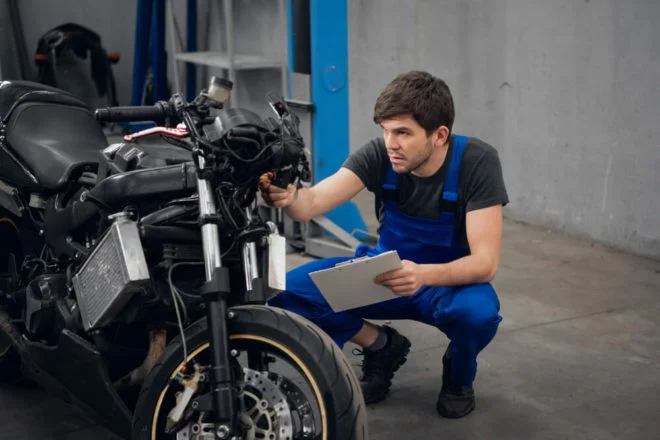
Riding a motorcycle is one of the most liberating experiences you can have. It is just you, the machine, and the open road. But unlike driving a car, where you are protected by a metal cage, riding a bike exposes you to the elements and the risks of the road. Because of this, the mechanical health of your motorcycle is not just about keeping it running; it is about keeping you alive. A small mechanical failure that might be an annoyance in a car can be catastrophic on a bike. This is why having a solid routine is so important. A comprehensive bike condition and inspection guide is the most valuable tool in any rider’s arsenal. It empowers you to spot problems before they happen, saving you money on repairs and ensuring that every ride is safe and enjoyable.
Many riders rely entirely on their mechanic. They take the bike in for service once a year and assume everything is fine in between. While professional service is vital, a lot can happen in a year. Tires lose pressure, chains stretch, and bulbs burn out. You need to be the captain of your own ship. You need to know how to look at your machine and understand what it is telling you. This does not mean you need to be an expert mechanic with a garage full of tools. You just need to know what to look for. In this detailed bike condition and inspection guide, we are going to walk through every part of your motorcycle. We will explain exactly what to check, how to check it, and why it matters, all in simple, easy-to-understand language.
Why Following a Bike Condition and Inspection Guide is Critical
The first question many new riders ask is why they need to inspect their bike so often. The answer lies in the nature of motorcycles. They vibrate. They are exposed to rain, dust, and heat. They are lightweight high-performance machines. These factors cause parts to loosen, wear out, and degrade faster than they do on cars. A proper bike condition and inspection guide helps you stay ahead of this wear and tear. When you inspect your bike regularly, you get to know its “normal” state. You learn how the engine sounds, how the brakes feel, and how the suspension reacts.
Once you know what is normal, it becomes very easy to spot what is abnormal. You will notice if the chain sounds a little louder than usual. You will feel if the brake lever is a little softer than it was last week. This early detection is the magic of using a bike condition and inspection guide. It allows you to fix a loose bolt before it falls off, or tighten a chain before it damages the sprockets. It turns you from a passive rider into an active owner. This guide is designed to be your checklist. By following this bike condition and inspection guide, you establish a habit of safety that will stay with you for as long as you ride. It is not just about maintenance; it is about peace of mind. Knowing your bike is in perfect condition allows you to relax and focus on the joy of the ride.
Tyres and Wheels The Foundation of Your Bike Condition and Inspection Guide
The most critical part of any bike condition and inspection guide is the tires. Your tires are the only thing connecting you to the road. The contact patch of a motorcycle tire is smaller than a credit card. That tiny patch of rubber has to handle all your acceleration, braking, and cornering forces. If your tires are in bad shape, nothing else matters. Start your inspection by checking the air pressure. You cannot tell if a modern tire is low just by kicking it. You must use a pressure gauge. Check the pressure when the tires are cold, before you have ridden. Compare the reading to the number in your owner’s manual or on the sticker on the bike frame, not the number on the tire sidewall.
Next, look at the condition of the rubber. This is a huge part of your bike condition and inspection guide. Look for cuts, nails, or glass embedded in the tread. Look for “dry rot,” which appears as tiny cracks in the sidewall. This happens when tires get old and the rubber dries out. Old, hard rubber does not grip the road, especially in the rain. Check the tread depth. Most tires have “wear bars” inside the grooves. If the tread is worn down to these bars, you need new tires immediately. Finally, check the wheels themselves. If you have spoked wheels, check for loose or broken spokes. If you have cast wheels, look for dents or cracks in the metal rim. A damaged wheel can cause a blowout at speed. Including a thorough wheel check in your daily bike condition and inspection guide is a non-negotiable safety step.
Braking Systems in Your Bike Condition and Inspection Guide
After the tires, the brakes are the next most important safety feature. Your bike needs to go, but more importantly, it needs to stop. A comprehensive bike condition and inspection guide places a heavy emphasis on brake health. Start by checking the brake pads. You can usually see these without taking the wheel off. Look into the brake caliper. You should see a thick pad of friction material touching the metal disc. If the pad is very thin—less than the thickness of a coin—it is time to replace them. If you let the pads wear down to the metal backing plate, you will destroy your expensive brake rotors.
Next, check the brake fluid. This is often overlooked in a basic bike condition and inspection guide, but it is vital. Look at the reservoir on your handlebars (for the front brake) and near the engine (for the rear brake). The fluid should be clear or light yellow, like apple juice or honey. If it looks like dark coffee or soy sauce, it is old and needs to be flushed. Brake fluid absorbs water over time, which can cause rust inside the braking system and lead to brake failure when the brakes get hot. Finally, test the feel. Squeeze the brake lever. It should feel firm and progressive. If the lever touches the handlebar or feels “spongy,” you have air in the lines. A good bike condition and inspection guide reminds you that spongy brakes are dangerous brakes.
Drive Chain and Sprockets Maintenance
For most motorcycles, the chain is the muscle that moves the bike. It transfers power from the engine to the rear wheel. It lives a hard life, exposed to dust, mud, and rain. Therefore, chain maintenance is a central pillar of any bike condition and inspection guide. First, check the tension. The chain should not be tight like a guitar string; it needs a little bit of slack to move up and down as the suspension works. Check your manual for the correct amount of slack, usually about an inch. If it is too loose, it can jump off the sprocket. If it is too tight, it can snap or damage the engine bearings.
Next, look at the lubrication. A dry chain is a dying chain. The metal links need oil to pivot smoothly. If the chain looks rusty or sounds squeaky, it needs to be cleaned and lubed. A proper bike condition and inspection guide will tell you to lube the chain every 300 to 500 miles. Also, inspect the sprockets (the gears the chain rides on). The teeth should be symmetrical. If the teeth look hooked, like a shark fin, they are worn out. Putting a new chain on old sprockets is a waste of money because the old sprockets will ruin the new chain quickly. Always replace them as a set. This section of the bike condition and inspection guide saves you from being stranded with a broken chain.
Engine Oil and Coolant Checks
The engine is the heart of your machine, and fluids are its lifeblood. No bike condition and inspection guide is complete without checking the engine oil. Most bikes have a sight glass on the side of the engine or a dipstick. Stand the bike up straight (not on the side stand) to get an accurate reading. The oil level should be between the “Low” and “Full” marks. Also, look at the color. Fresh oil is golden. Black oil is normal if it has been used for a while, but if it looks milky or like chocolate milk, that means water has gotten into the engine, which is a serious problem.
If your bike is liquid-cooled, checking the coolant is another essential step in your bike condition and inspection guide. The coolant reservoir is usually made of white plastic so you can see the level. Ensure it is topped up. Coolant prevents your engine from overheating in traffic and freezing in winter. Never open the radiator cap when the engine is hot! You could be burned by steam. Checking for leaks is also part of this bike condition and inspection guide. Look under the bike where you park. If you see drops of oil or green coolant on the ground, you have a leak that needs to be fixed. Catching a leak early prevents engine damage and keeps oil off your tires.
Lights and Electrical Systems
In the modern world, being seen is just as important as seeing. Your electrical system is your voice on the road. It tells other drivers what you are doing. A thorough bike condition and inspection guide must include a check of all lights and switches. Start with the headlight. Check both the low beam and the high beam. Headlight bulbs can burn out one filament while the other still works, so check both. Then check the tail light. It should be on whenever the bike is running.
Now, check the brake light. This is a two-part check in any good bike condition and inspection guide. Squeeze the front brake lever; the light should get brighter. Release it. Press the rear brake pedal; the light should get brighter again. It is common for the rear brake switch to get stuck or broken, meaning drivers behind you won’t know you are stopping. Check all four turn signals. If one is blinking fast, it usually means a bulb is burned out. Finally, check the horn. It might seem trivial, but a loud horn can save your life if a car starts to merge into your lane. Following this electrical section of the bike condition and inspection guide ensures you are visible and legal on the road.
Suspension and Steering Dynamics
The suspension is what keeps your tires on the ground and makes the ride comfortable. It is complex, but checking it is simple if you follow a bike condition and inspection guide. Start with the front forks. These are the shiny metal tubes connecting the front wheel to the handlebars. Run your finger over the chrome part. It should be dry. If you find oil on the tubes, your fork seals are leaking. Leaking fork oil can drip down onto your brakes, which is a disaster.
Check the steering head bearings. This sounds technical, but it is a standard part of a bike condition and inspection guide. Sit on the bike and hold the front brake. Push the bike forward and rock it. If you feel a “clunk” or movement in the handlebars, the bearings are loose. Put the bike on a center stand if you have one, and turn the handlebars from side to side. They should move smoothly. If you feel a “notch” or a sticky spot in the middle, the bearings are worn. This can make the bike handle poorly and weave on the highway. Your bike condition and inspection guide helps you maintain the precise handling that makes riding so fun.
Frame and Cosmetic Inspection
While the mechanical parts are vital, the structural integrity of the bike is the skeleton that holds it all together. A complete bike condition and inspection guide should include a walk-around to check the frame and bodywork. Look for rust. Rust on the chain is bad, but rust on the frame welds is dangerous. If you see rust bubbling under the paint on the frame, it needs to be treated.
Check the fasteners. Motorcycles vibrate, and vibration loosens bolts. Go around the bike with a wrench and check the important nuts and bolts: the axle nuts, the brake caliper bolts, and the handlebar bolts. You don’t need to overtighten them, just make sure they aren’t loose. This is a quick step in the bike condition and inspection guide that prevents parts from falling off. Also, look at the bodywork. Loose fairings can rattle and eventually crack. Missing clips or screws should be replaced. A clean, tight bike feels better to ride. Including a cosmetic check in your bike condition and inspection guide also helps maintain the resale value of your machine.
The Pre-Ride Ritual in Your Bike Condition and Inspection Guide
All the detailed checks we just discussed are great for a weekly or monthly routine. But you also need a quick version for every time you ride. This is often called the T-CLOCS method in a standard bike condition and inspection guide. T-CLOCS stands for Tires, Controls, Lights, Oil, Chassis, and Stand. It is a quick mental checklist.
Before you put your helmet on, do a 30-second scan. Kick the tires (gently) to check for major pressure loss. Squeeze the levers. Turn the key and check the lights. Look for puddles under the engine. Make sure the side stand flips up securely. This mini bike condition and inspection guide becomes muscle memory. It ensures that you never ride off on a bike that has a flat tire or no brakes. It is the final barrier between you and a mechanical failure. Adopting this daily habit is the hallmark of a responsible and safe motorcyclist.
Conclusion Mastering the Bike Condition and Inspection Guide
Owning a motorcycle is a journey. It is a relationship between you and the machine. By using this bike condition and inspection guide, you are holding up your end of the bargain. You are promising to take care of the bike so that it can take care of you. None of the steps we have covered are difficult. None of them require a degree in engineering. They just require you to pay attention.
When you follow a bike condition and inspection guide regularly, you become tuned in to your motorcycle. You stop being just a passenger and become a true operator. You will save money because you will catch a dry chain before it ruins the sprockets. You will save money because you will spot low oil before the engine seizes. But most importantly, you will be safer. You will have the confidence of knowing that when you lean into a corner, your tires are grippy and your suspension is tight. You will know that when you grab the brakes, the bike will stop.
Make this bike condition and inspection guide a part of your life. Print it out, stick it on your garage wall, or just keep it in your mind. Share it with your riding buddies. The more we all care for our machines, the safer the roads are for everyone. So, go out to your garage today. Grab a rag and a flashlight. Use this bike condition and inspection guide to give your bike the love it deserves. Your bike will reward you with miles of smiles, reliable performance, and the pure freedom that only two wheels can provide.