
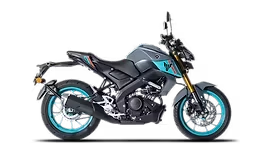
In today’s fast-paced world, getting from point A to point B efficiently is more important than ever. Traffic congestion is increasing in every major city, fuel prices are fluctuating constantly, and the cost of living keeps going up. In this challenging environment, commuter bikes have emerged as the unsung heroes of the road. You see them everywhere. They are the reliable machines weaving through gridlock, parked in front of offices, and carrying students to college. But commuter bikes are more than just cheap transportation; they are a lifestyle choice that prioritizes logic, economy, and practicality. Whether you are a young professional starting your first job or a seasoned rider looking to downgrade from a heavy sports bike, understanding the value of commuter bikes can change the way you travel forever.
When we talk about commuter bikes, we are talking about motorcycles designed specifically for the daily grind. They are not built for racing on a track, and they are not built for crossing continents on dirt trails. Commuter bikes are built to survive the urban jungle. They are engineered to be lightweight, easy to handle, and incredibly fuel-efficient. For millions of people around the world, commuter bikes are the primary mode of transport. They offer a sense of freedom that a car simply cannot match during rush hour. If you have ever been stuck in a car, watching a rider on one of these commuter bikes glide past you, you know exactly what I mean. In this comprehensive guide, we are going to explore everything there is to know about these amazing machines. We will look at why they are so popular, how to maintain them, and how to choose the perfect one for your needs.
Understanding the Rising Popularity of Commuter Bikes in Modern Cities
The rise of commuter bikes is not an accident. It is a direct response to the needs of modern urban living. As cities get more crowded, parking becomes a nightmare. A large SUV or a sedan requires a significant amount of space, but commuter bikes can be parked almost anywhere. This convenience factor is a huge draw for people who work in downtown areas where parking space is premium and expensive. Furthermore, commuter bikes offer a level of agility that is unmatched. You can navigate through tight gaps in traffic, take shortcuts that cars cannot access, and generally reduce your travel time significantly.
Another reason for the popularity of commuter bikes is their accessibility. Unlike high-performance motorcycles that require advanced riding skills and physical strength to manage, commuter bikes are designed to be user-friendly. They usually have a low seat height, which allows riders of all heights to plant their feet firmly on the ground. The power delivery of commuter bikes is smooth and predictable, making them perfect for beginners who are just learning to ride. You do not need to be an expert to ride commuter bikes safely; you just need basic balance and road sense. This low barrier to entry means that anyone, from college students to retirees, can enjoy the benefits of two-wheeled travel.
The Unbeatable Fuel Efficiency of Today’s Best Commuter Bikes
If there is one single reason why people choose commuter bikes over any other type of vehicle, it is mileage. Fuel economy is the holy grail of daily transportation. In this department, commuter bikes are the undisputed kings. Manufacturers spend millions of dollars on research and development to squeeze every last drop of energy out of the fuel. A typical car might give you 10 to 15 kilometers per liter in city traffic. In contrast, good commuter bikes can easily deliver 60, 70, or even 80 kilometers per liter. This is a massive difference that directly impacts your bank account.
Imagine cutting your monthly fuel bill by 75%. That is the reality of switching to commuter bikes. Over the course of a year, the savings are substantial enough to pay for the bike itself. This efficiency is achieved through smaller, smarter engines. Most commuter bikes have engine capacities ranging from 100cc to 160cc. These engines are tuned for low-end torque, which means they have plenty of pulling power at low speeds—exactly what you need for city riding. You rarely need to rev commuter bikes high to get them moving, which keeps fuel consumption low. For anyone on a budget, or for anyone who hates the idea of wasting money on gas, commuter bikes are the logical solution. The engineering behind commuter bikes focuses on reducing friction and weight, ensuring that the engine runs as efficiently as possible in stop-and-go traffic conditions.
Comfort and Ergonomics Why Commuter Bikes Are Built for the Long Haul
When you ride a motorcycle every day, comfort is not a luxury; it is a necessity. If your back hurts or your wrists ache after a thirty-minute ride, you will eventually stop riding. This is where commuter bikes shine. Unlike sports bikes that force you into an aggressive, hunched-over position, commuter bikes are designed with an upright riding posture. The handlebars are positioned higher and closer to the rider, allowing you to sit up straight with a relaxed spine. The footpegs on commuter bikes are placed in a neutral position, so your legs are not cramped.
The seats on commuter bikes are also different. They are usually long, flat, and well-cushioned. This provides plenty of room for a rider and a pillion (passenger) to sit comfortably. Manufacturers know that commuter bikes are often used as family vehicles, carrying heavy loads or two people, so the suspension is tuned to be soft and absorbent. It soaks up the bumps and potholes of city roads, protecting your back from harsh impacts. When you are stuck in traffic for an hour, the ergonomic design of commuter bikes ensures that you arrive at your destination feeling fresh, not exhausted. This focus on rider comfort is a defining characteristic that separates commuter bikes from their sportier cousins.
Maintenance Made Easy Taking Care of Your Commuter Bikes
One of the biggest fears new vehicle owners have is the cost of maintenance. Cars and high-performance motorcycles can be incredibly expensive to service. However, commuter bikes are famous for being low-maintenance machines. They are built to be tough and durable. The technology used in commuter bikes is often simple and time-tested, which means there are fewer things that can go wrong. Parts are widely available and generally very cheap. You can find a mechanic who knows how to fix commuter bikes on almost every street corner in many countries.
Routine maintenance for commuter bikes usually involves simple tasks like changing the engine oil, adjusting the chain tension, and checking the brake pads. These are jobs that many owners learn to do themselves, saving even more money. The tires on commuter bikes are made of hard compounds that last for thousands of kilometers, unlike the soft, sticky tires on sports bikes that wear out quickly. Even if you neglect commuter bikes slightly (though you shouldn’t), they will often keep running without complaint. This “fill it, shut it, forget it” reliability is a major selling point. For a daily tool that you depend on, the robustness of commuter bikes provides immense peace of mind. You know that your bike will start every morning, rain or shine.
Commuter Bikes vs Scooters Making the Right Choice for Your Daily Ride
A common dilemma for city travelers is choosing between commuter bikes and scooters. Both have their advantages. Scooters offer the convenience of automatic transmission (no gears) and under-seat storage. However, commuter bikes offer distinct advantages that make them superior for many riders. First is the wheel size. Commuter bikes have larger wheels (usually 17 or 18 inches) compared to the small wheels of a scooter. Larger wheels offer much better stability on bad roads and handle potholes significantly better. When you hit a bump on commuter bikes, the bike remains stable, whereas a scooter might feel twitchy.
Second is the suspension travel. Commuter bikes generally have better suspension with more travel, providing a smoother ride quality. Third is longevity. The engines and gearboxes on commuter bikes are generally more robust and longer-lasting than the CVT transmission found in scooters. And finally, there is the engagement factor. Riding commuter bikes involves shifting gears and using a clutch. For many, this makes the ride more engaging and fun. It gives you more control over the engine’s power, which is useful when overtaking or climbing hills. While scooters are great for short, lazy trips, commuter bikes are better suited for longer commutes and varied road conditions. The durability of commuter bikes makes them a better long-term investment for serious daily usage.
Key Features to Inspect Before Purchasing New Commuter Bikes
If you are in the market for a new ride, it can be overwhelming to choose from the hundreds of commuter bikes available. To make the right choice, you need to focus on a few key features. First, look at the mileage figures. Since you are buying commuter bikes to save money, ensure the bike delivers real-world efficiency. Read reviews from actual owners, not just the manufacturer’s claims. Second, check the seat height and weight. You should feel confident handling the bike. Sit on it in the showroom. Is it too heavy? Can you reach the ground? Commuter bikes should feel light and manageable.
Third, look at the braking system. Modern commuter bikes often come with safety features like CBS (Combi-Braking System) or ABS (Anti-lock Braking System). These are vital for safety on slippery city roads. Fourth, consider the service network. Buy commuter bikes from a brand that has a service center near your home or office. You do not want to travel 50 kilometers just to get an oil change. Finally, look for practical features like a fuel gauge, a gear position indicator, and a comfortable grab rail for the passenger. These small details make living with commuter bikes much easier on a daily basis.
Safety First Essential Gear for Riding Commuter Bikes in Traffic
Riding commuter bikes is safe if you take the right precautions, but you are still vulnerable on the road. Many riders of commuter bikes make the mistake of riding in flip-flops and t-shirts because they are “just going to work.” This is dangerous. Regardless of what bike you ride, gravity works the same way. You need proper gear. The most important item is a certified helmet. Do not buy a cheap roadside helmet; buy one that actually protects your head.
Gloves are also essential. If you fall, your natural instinct is to put your hands out. Riding gloves protect your skin and also improve your grip on the handlebars of commuter bikes, especially in the rain. A riding jacket with basic armor is a good investment, but if that is too hot, at least wear a thick denim jacket or a windcheater. Sturdy shoes are non-negotiable. Never ride commuter bikes in open-toed sandals. You need shoes that cover your ankles and provide grip when you put your foot down at traffic lights. Remember, the gear is not just for crashes; it protects you from the sun, the wind, and flying debris. Being properly dressed makes riding commuter bikes much less fatiguing and much safer.
The Economic Impact How Commuter Bikes Save You Money Every Month
Let us break down the economics of owning commuter bikes. The initial purchase price is low. You can buy a brand new, high-quality commuter bike for a fraction of the cost of a car. The insurance premiums for commuter bikes are significantly lower than for cars. The maintenance costs, as we discussed, are minimal. But the biggest saving is fuel. If you switch from a car to one of the popular commuter bikes, you could easily save thousands of currency units every month.
Time is also money. If commuter bikes save you 30 minutes each way on your daily commute, that is one hour a day. That is five hours a week, or roughly 20 hours a month. What is your time worth? You could use that time to sleep more, work more, or spend time with your family. Furthermore, the resale value of commuter bikes is generally very good. Because there is always a high demand for cheap, reliable transport, you can sell your used bike quickly and for a decent price when you are ready to upgrade. When you add it all up—purchase price, fuel, maintenance, insurance, and time—commuter bikes are arguably the most financially sound mode of personal transport available today.
The Future is Green Electric Commuter Bikes and the Environment
The world of commuter bikes is evolving. While petrol engines have dominated for decades, the future is electric. Electric commuter bikes are hitting the market with impressive capabilities. They offer the same benefits as petrol bikes—agility, small size, practicality—but with zero tailpipe emissions and even lower running costs. Charging an electric bike costs pennies compared to buying petrol.
For city riding, electric commuter bikes are perfect. They have instant torque, which makes zipping away from traffic lights fun and easy. They are silent, which reduces noise pollution in our cities. The range of these bikes is improving every year, easily covering the daily distance required by most commuters. Governments are also offering subsidies to buy electric commuter bikes, making them an attractive option. While the initial cost might be slightly higher, the almost zero maintenance (no oil changes, no spark plugs) makes them cheaper in the long run. Whether you choose petrol or electric, the philosophy remains the same: commuter bikes are about smart, efficient, and responsible travel.
Conclusion Embracing the Commuter Lifestyle
In conclusion, commuter bikes represent a smart solution to modern problems. They are the answer to rising fuel costs, choking traffic, and the high cost of living. They are tools of freedom that allow you to take control of your time and your money. By choosing to ride commuter bikes, you are not just choosing a vehicle; you are choosing a lifestyle of efficiency.
We have covered the comfort they offer, the money they save, and the ease with which they can be maintained. We have looked at how to choose the right one and how to ride it safely. Whether you are a student, a professional, or just someone who loves the practicality of two wheels, there is a bike out there for you. The market for commuter bikes is better than it has ever been, with options that are stylish, safe, and incredibly frugal.
So, if you are tired of sitting in traffic jams, staring at the bumper of the car in front of you, consider making the switch. Visit a showroom, take a test ride, and feel the difference for yourself. Join the millions of riders who have discovered that commuter bikes are the smartest way to move through the world. Your wallet will thank you, your schedule will thank you, and you might just find that the daily commute becomes the best part of your day. Commuter bikes are not just about getting to work; they are about enjoying the journey. Happy riding!